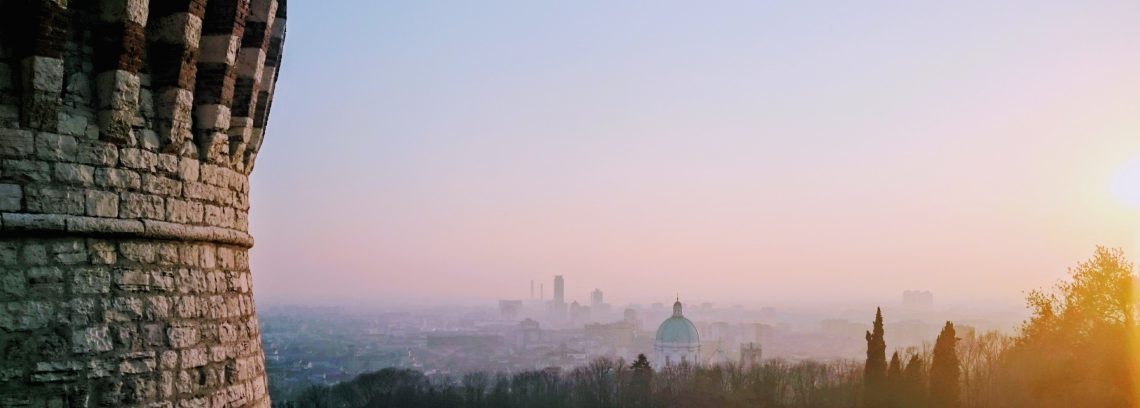
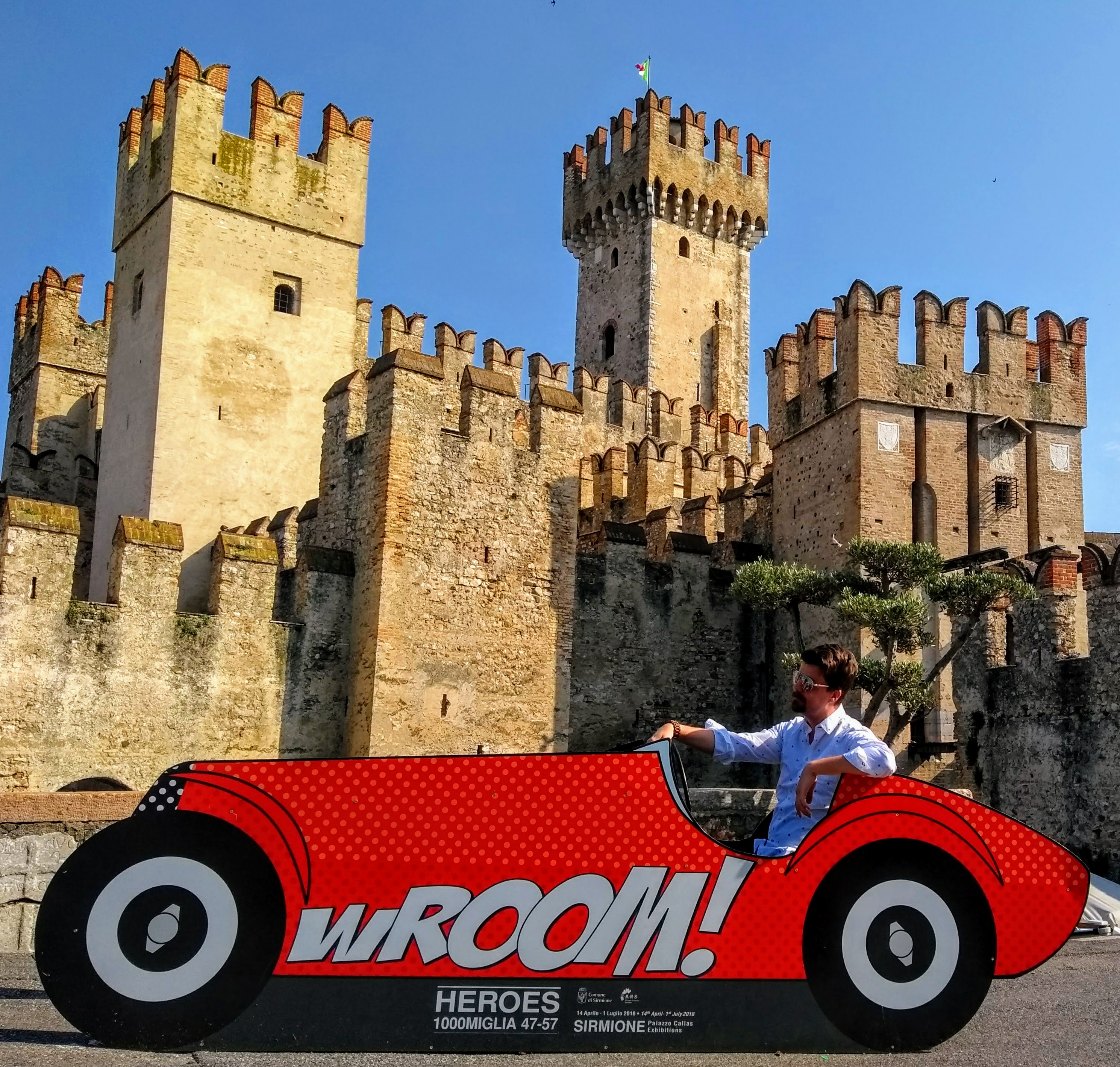
One upon a time there was a boy. Once upon a time this boy loved a girl. Once upon that one same time they lived happily ever after in their castle until…
Once upon a midnight stormy, weakened, wearied, quite forlornly,
Arrived so soaking wet and choking, a knight from eastern shore.
While they lay entwined, enraptured, suddenly they heard the fracture,
The nascent couple listened to the fracture of their castle door.
“What disaster strikes,” she sputtered, “having broke’ our castle door?
A wounded knight and nothing more!”
Quietly upon occasion, onerous the operation,
Gently, gingerly, the couple lifts their guest up from the floor.
“Please don’t leave I do beseech thee! Don’t cast me aside so freely
I swear to you I shall discretely, leave tomorrow o’er the moor.”
They acquiesce, agree together, to permit one night, not more.
“Just until morn I do implore!”
Now at ease the knight envisions taking more than fair provisions,
While our maiden minds his wounds, attending muscles, joints, so sore.
The boy asleep, quite forgotten; the knight’s intent turning rotten;
Evil plans so misbegotten; a noble presence masks rancour.
Taking by surprise our maiden, he throws her down upon the floor.
The maiden left to scream no more.
Rising quickly, now awoken, thunderstruck by cries outspoken,
Racing through the stonework hallways, stumbling down the corridor,
The boy discovers, in dismay, his lover’s room in disarray,
And crying fiercely throws himself upon the wretched malefactor.
With such swift and true precision the boy’s sword strikes him at the core.
Thus evil vanquished creates lore.
Now alone and without passion, our hero’s visage always ashen,
Wand’ring through her empty tomb, succumbed to life’s love lost before.
Forever now cursed to stumble, amble idly, mildly mumble,
He’s searching, searching, searching madly for his ancient love of yore.
Standing still his home ages, stories tell his ancient love of yore.
Our poor soul’s fate remains unsure.
… Quoth the blogger, “Let’s not do this again, shall we?”
And thus, in a weirdly roundabout way, goes the legend of beautiful Arice, her faithful companion Abengard, and Elalberto the evil knight of Veneto. It is said that if you visit the castle late at night you can still hear the wails (and shaking chains, I’m sure) of the eternally lost lover, Abengard.
While the castle of Sirmione, guarding the tip of a teeny peninsula peeking out into Lake Garda, definitely exists, the legend is probably nothing more than anti-Venetian propaganda, considering that the region has changed hands more than several times over the past eight hundred years. In fact, looking carefully throughout the town, just as in Brescia, one can see the remnants of the additions made by The Most Serene Republic before it’s decline. Keep an eye out for the lion of St. Mark!


Castles and ghost stories aside, Sirmione is also known for its thermal baths and a very well excavated ancient Roman villa rumoured to date back to the time of good ol’ Julius himself, the Grottoes of Catullus.
Since driving in the small city centre is reserved for the residents and exclusive visitors to the spas, we park outside the castle walls and walk through town, it’s manicured lawns and perfectly clear waters the definition of picturesque.
After a quick overpriced coffee (you’re really paying for the view), we walk along the shore toward the Grottoes on a narrow boardwalk, tightly bound by the lake on one side and the fences, gates, and walls of private gardens on the other.
As we round the first bend, it becomes obvious why this small outcropping of rock is so exclusive and famous: the horrifying stench of rotten eggs.
While most of the peninsula is cordoned off and gated to protect those undergoing private underground treatments, the gracious powers-that-be, in their grand munificence, have reserved a rusty pipe jutting out from the shore to share the miraculous wonder of sulphuric scent, now swarmed by tourists basking in the odorous environs. We tiptoe over discarded clothing strewn about the narrow walkway and continue upward and inward to a properly magnificent sight.
Like most history in Italy, legend is conflated with actual fact, and since few are interested in separating the two (it does make a more interesting tale), we are often left with conflicting accounts of reality. As a result, I am sorry to say, that the Grottoes of Catullus are not actually of Catullus, but simply a place that is said to be one that he might have liked to have visited, unless, of course, you believe that other plaque stating differently. Regardless, this otherworldly villa of ancient Roman origin, most likely from around 150AD (200 years after Julius and Catullus), is still a marvellous site.


For all its faults, I hate to admit that the government of Italy really does its museums well. While it may seem as though I’m trying to be ironic, I really cannot get enough at looking at old stones placed on top of each other. You rock, rocks! The exhibits are preserved very well and being able to walk among the ancient columns surrounded by the sights of Lake Garda really is the experience of a lifetime. Graciously, on the first Sunday of every month, sites such as Scaligero Castle and the Grottoes are free to the public, so if one plans well, they never have to break the bank to benefit from the bountiful beauty abounding. Plus, the sulphur pipe!
The only real downside to the trip was to see a couple large properties cordoned off and completely crumbing in disrepair. Unfortunately, this seems to be the case too often across Italy, where owners are unable or unwilling to maintain their property, and refuse to sell to someone who will. I’m not sure if it’s a real problem or not, but in a country so crowded and with “regular” people having such difficulty finding an affordable living situation, it seems a shame. Canada is not necessarily better, of course: despite the abundance of surrounding space, we’ve had several famous empty holes in the densest parts of our cities.
To end on a lighter note, I should mention, of course, that on our way back home we stopped for even more amazing pizza!


PS. Catullus is actually a pretty big deal, if you’ve never heard of him. He’s like the Roman Shakespeare, but really, really good at insulting his friends.
 A Nix in Brixia

1 Comment
Comments are closed.