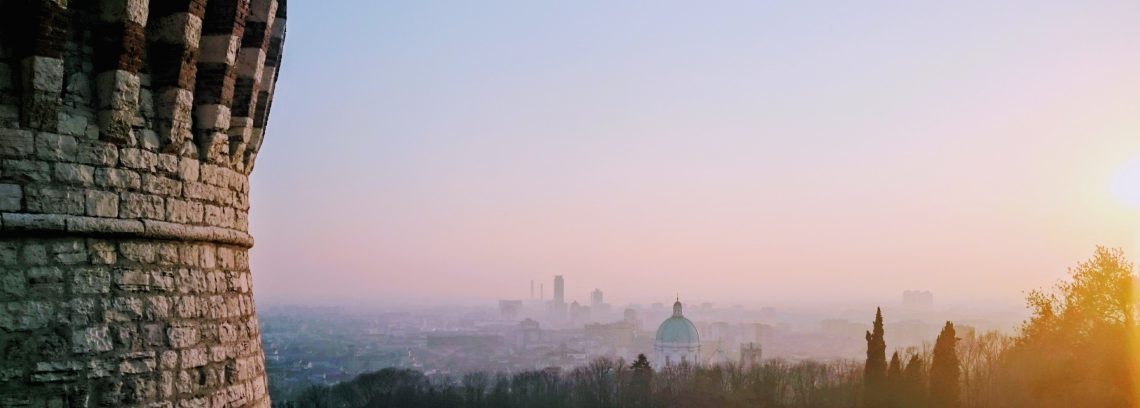
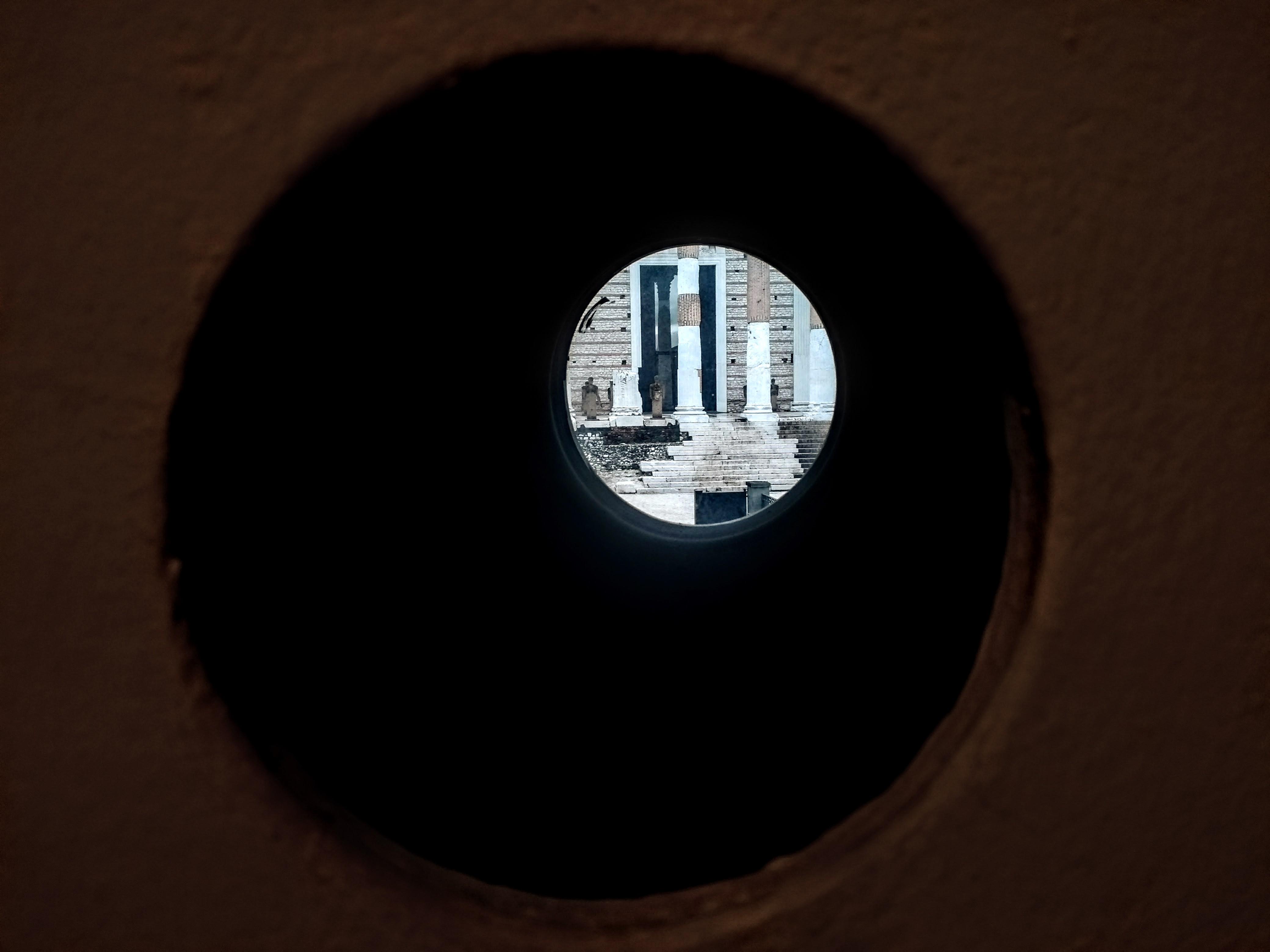
When I first properly stayed in Brescia, about two years ago now, I was in a tiny little one room loft with exposed beams and bricks, a futon that opened into the kitchen, a hot plate, and a fantastic view of the ancient historic stone of the damp lane outside the window.
While we were so close to the grand piazzas of the historic city centre, with Catholic domes and fascist posts, Roman columns and medieval clocks, our stoop, just ten metres away, was halfway down a dim and narrow street. Ominously leaning in on itself, Vicolo dell’Ombra (yes it is literally called Shadow Alley) is nestled between the busyness and light of a commercial plaza and a monstrously dark portone (that is, a really big door) at the other end.
For two years I have gone out of my way to walk by this door in the hopes of seeing it open. And several times in fact I have turned the corner only to hear the final clunk as the sombre wood locks itself into place.
Finally, nigh but just a month ago, I saw it wide open! Much to my surprise, and despite its brooding facade, the interior courtyard houses a delightful garden replete with lush greens adorned by greco-roman statues. It’s probably the most luxurious private car park I have ever seen.
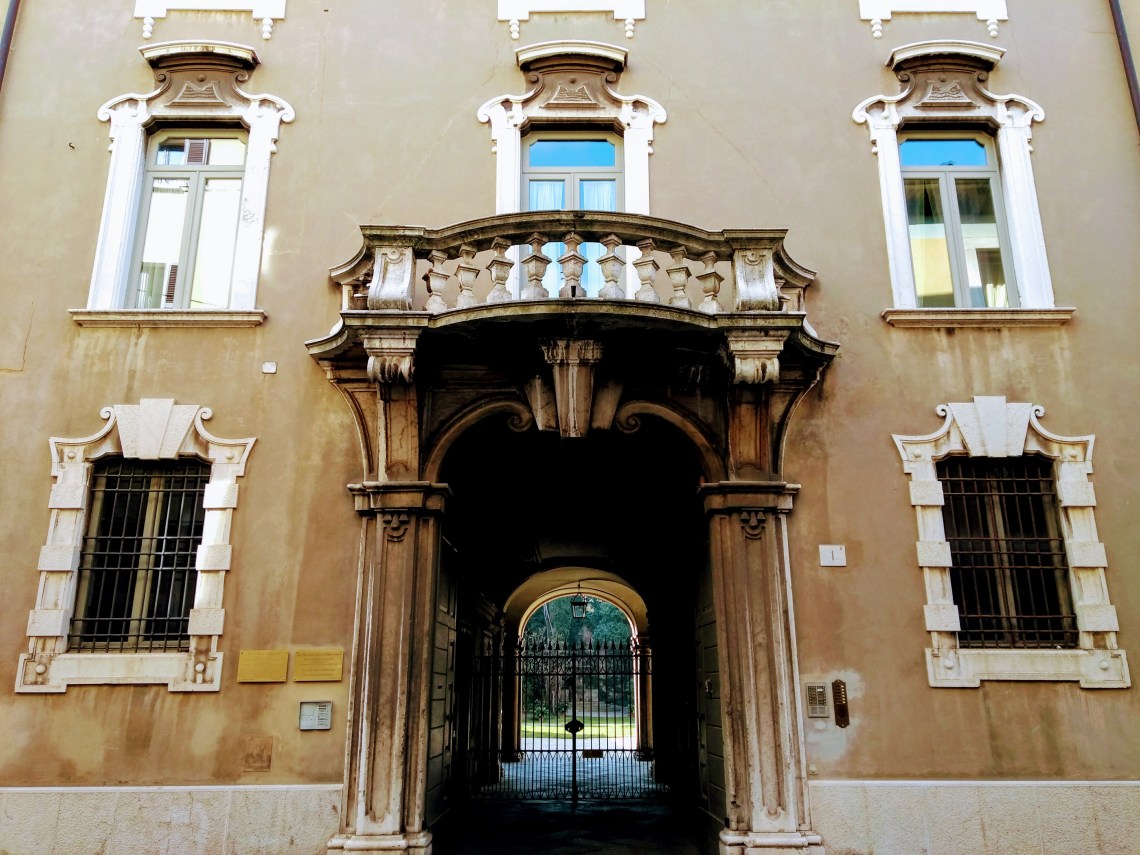
Such is life in Brescia, with the fabulously mundane overgrown with dense ancient beauty. If one knows where to look and keeps a patient eye, they’re in for a real treat provided they don’t mind a bit of mild trespassing.
As I mentioned before, it seems that many old Italian cities are built in this way (through no fault of their own), large palazzi looming over narrow streets, fastidiously guarding the inner beauty hiding behind wrought iron. Outside of the open city centres and public parks (with which Brescia is quite blessed), it’s hard to find anything but cold stone walls and dusty shuttered windows. Just behind however, residents and workers alike are lucky to enjoy such serenity protected from the noise and grit of the city outside.


Thankfully these days each palazzo (literally palace, but today describes just a regular ol’ building) is more likely to house a block of flats or series of offices than be solely owned and occupied by a single elder family. This anxious Canadian aesthete is happy that more and more people are able to share the natural wealth of such a truly awesome and awe-inspiring country.
With the spirit of sharing fresh in my mind, I am delighted to see advertised all over town a special exhibit promoting for the first time ever artistic works donated from the private collections of Brescia’s most munificent.
Finally, our truly great local benefactors have graciously deigned to display their cumulative wealth from which we mildly cultured plebs shall be allowed to avert our gaze!
Before I go full-Bolshevik, I should mention that I am truly grateful for the tireless efforts of the organizers, curators and donors for bringing such hidden gems once again into gallery light to be enjoyed by the public-at-large for only a nominal fee. Without their great cooperative achievement, how could one such as I ever have the opportunity to share in the creative delight of a piece such as this:
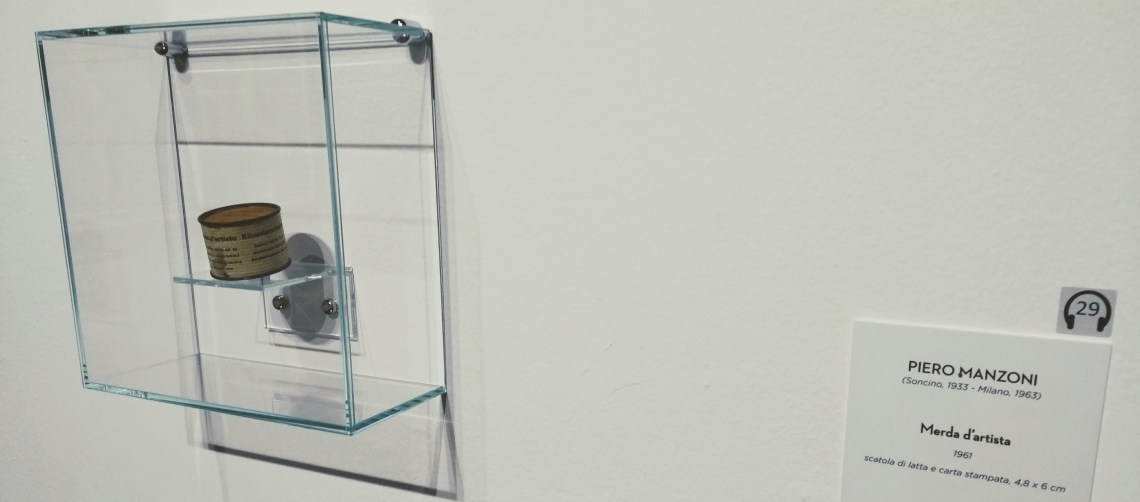
Postmodern manshit aside, it was a pretty great, albeit small, exhibit. For me it was worth the price, but I wouldn’t recommend it unless you have a patient girlfriend ready to explain why things were done the way they were and why it matters.
Not being a formal student of art, I can’t quite tell you what I loved best, or why. The series of realist paintings depicting scenes from the Italian unification really struck me, as did semi-impressionist views of lakes Garda and Iseo, which are nearby and I hope to visit soon.
I didn’t care for the solo Picasso in the group, but I did love the works of the Italians he influenced, like De Chirico.


Probably my favourites, of which I wasn’t able to sneak a surreptitious snapshot, are Sogno di primavera and Sogno di autunno (dream of spring and autumn) by Modesto Faustini, a native of Brescia from the 19th Century.
Depicting mythological manifestations of contrasting seasons, the two ornately framed paintings hang next to each other and provide a deep sense of the magnitude of change to which we mere mortals are subjected. The lightly coloured female Spring floats before a blossoming tree releasing playful cherubim into the countryside while the darker palette of the male Autumn catches the angelic creatures in his net before the craggy backdrop of the cliffs surrounding lake Garda. If I were to continue writing as if this were a terrible high school essay, I’d probably mention motifs of sowing, reaping, planting, harvest, hope, despair, the playfulness of youth, the steadfast realism of age, or something like that. Regardless, permit me my pretension, ’cause I just plain liked ’em and I’m not sure why.
Finally, to round things out, on the way home Antonella showed my some fantastic murals and graffiti littering the neighbourhood, which I do want to show off at some point. However, not wanting to overwhelm, I’ll leave you with this delightful alpaca:

 A Nix in Brixia